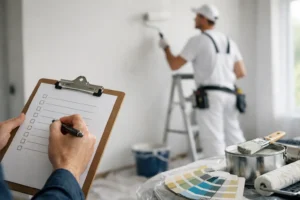
A bathroom can look freshly painted on day one and still fail within a year. Steam settles on the walls, splashes collect around the vanity, and ordinary flat paint can begin to stain, soften, or show mildew spots. Choosing the best paint finish for bathrooms is less about chasing shine and more about selecting a surface that stands up to daily moisture while still looking polished.
For most bathrooms, satin is the dependable choice. It offers a soft, low-sheen appearance, cleans up easily, and provides better moisture resistance than flat or eggshell finishes. In high-humidity bathrooms, or on walls that receive frequent splashing, semi-gloss may be the smarter option. The right answer depends on the room’s ventilation, wall condition, and how the bathroom is used.
Why Bathroom Paint Finish Matters
Paint sheen affects more than appearance. As a finish becomes glossier, it generally forms a tighter, smoother surface. That makes it harder for moisture, dirt, and soap residue to cling to the wall, and easier for you to wipe the surface clean.
The trade-off is that higher sheen also reflects more light. In a bathroom with patched drywall, uneven texture, or older walls, a glossy surface can make imperfections more noticeable. A professional paint job starts with careful surface preparation because even the best finish cannot hide peeling paint, water damage, or rough repairs.
Kansas homes also experience changing temperatures and seasonal humidity. A bathroom exhaust fan helps, but it does not eliminate the need for a durable coating. Proper paint and prep work together to protect the room from the moisture created by showers, baths, and everyday use.
The Best Paint Finish for Bathrooms: Satin
Satin is the best all-around paint finish for bathrooms because it balances durability with a refined appearance. It has a subtle sheen that gives walls a clean, finished look without creating the obvious shine of semi-gloss.
A quality satin paint is a strong fit for primary bathrooms, guest baths, and powder rooms. It handles normal humidity well, resists minor scuffs and fingerprints, and can be cleaned with a soft sponge and mild cleaner. For homeowners who want a calm, modern wall finish, satin usually delivers the best result.
Satin is particularly useful when the bathroom walls are in decent condition but not perfectly smooth. It reflects enough light to make the space feel brighter, yet it is forgiving enough that small drywall variations do not become the first thing you notice when you turn on the vanity lights.
That said, not every satin product performs the same way. Lower-quality paint may still absorb moisture or burnish when scrubbed. A premium interior paint labeled for kitchens, baths, or high-moisture areas is worth considering, especially in a family bathroom that sees heavy daily use.
When Satin Is the Right Choice
Choose satin for bathroom walls when you have reliable ventilation, want a low-luster finish, and need a surface that can handle routine cleaning. It is the practical middle ground for most homes.
It is also a good choice for apartment turnovers and rental properties where a clean, consistent appearance matters. Satin offers a durable finish that looks professional without putting every minor wall flaw on display.
When Semi-Gloss Makes More Sense
Semi-gloss is more moisture-resistant and easier to clean than satin. It is often the better choice for bathrooms with poor ventilation, frequent hot showers, young children, or walls that receive regular water splashes near the tub or sink.
Its stronger sheen creates a tougher surface, which is useful in high-contact areas. Soap residue, toothpaste splatter, and fingerprints are easier to remove, and the coating is less likely to hold onto humidity over time.
The downside is appearance. Semi-gloss reflects noticeably more light, so roller marks, nail pops, drywall patches, and surface texture can stand out. If the walls are uneven, proper sanding, patching, and priming are essential before applying this finish.
For many homes, semi-gloss works best on trim, doors, cabinets, and window casings rather than every bathroom wall. Those surfaces take more wear and benefit from a finish that can be wiped down often. Pairing satin walls with semi-gloss trim creates a clean contrast without making the entire room overly shiny.
What About Eggshell, Flat, and High-Gloss?
Eggshell can work in a lightly used powder room with excellent ventilation, but it is not usually the first choice for a full bathroom. It has less sheen and is more forgiving than satin, yet it does not provide the same level of moisture resistance or cleanability. If your bathroom regularly fogs up after a shower, move up to satin or semi-gloss.
Flat or matte paint is best avoided on standard bathroom walls. Its soft appearance can be attractive, especially in newer designer finishes, but traditional flat paint tends to absorb moisture and show marks. It can be difficult to scrub without leaving visible spots or damaging the finish. Some specialty washable matte paints are formulated for bathrooms, but product quality and careful application matter greatly.
High-gloss is generally unnecessary for bathroom walls. It is extremely washable and moisture-resistant, but its reflectivity highlights nearly every surface imperfection. It is more commonly used as an accent finish on select trim, cabinetry, or decorative details.
Paint Quality and Prep Are Just as Important as Sheen
A bathroom finish performs well only when the surface underneath is sound. Painting over mildew, loose caulk, peeling coatings, or damp drywall may cover the problem briefly, but it will not solve it.
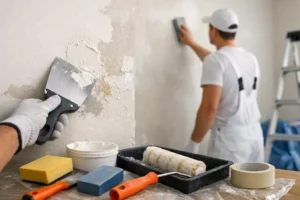
Before painting, the walls should be cleaned to remove soap film, oils, and residue. Any mildew should be treated properly, and the moisture source should be addressed. Cracks and damaged areas need repair, glossy existing paint should be lightly sanded or prepared for adhesion, and bare repairs should be primed.
Caulk also deserves attention. Gaps around trim, backsplashes, and fixtures can allow moisture into places it should not go. Fresh, paintable caulk creates cleaner lines and helps protect vulnerable edges. Once the walls are ready, applying the paint evenly at the recommended coverage rate gives the finish its best chance to perform.
Bathrooms are not a place to stretch a paint product too far. Thin coats and rushed drying times can lead to uneven sheen, weak coverage, and reduced durability. Two properly applied coats of quality bathroom-rated paint typically produce a more consistent, washable surface.
Ventilation Protects Your New Finish
Even the best bathroom paint cannot compensate for trapped moisture. Run the exhaust fan during showers and for at least 20 minutes afterward when possible. If the bathroom has no fan, opening a window or door can help move humid air out, though a properly vented fan is the more reliable long-term solution.
Pay attention to condensation on mirrors, walls, and ceilings. Persistent moisture can encourage mildew growth and shorten the life of the paint, particularly around showers and tubs. Repair plumbing leaks promptly, and make sure the fan actually vents outdoors rather than into an attic or enclosed space.
Ceilings need consideration, too. Many homeowners use a quality bathroom-rated matte or satin paint on the ceiling. A lower sheen can help conceal minor imperfections overhead, while a moisture-resistant formula helps prevent peeling and mildew in the area where steam rises first.
A Professional Finish Starts With the Right Plan
The best choice for most bathroom walls is satin, while semi-gloss is the better fit for trim and especially demanding, high-moisture conditions. But sheen is only one part of the decision. Ventilation, wall repairs, product quality, and careful application all influence how the room will look months after the paint dries.
If your bathroom has peeling paint, recurring mildew, damaged drywall, or a finish that has become difficult to clean, a professional assessment can prevent the same issues from returning. Royal Painting helps homeowners in Topeka and surrounding areas select durable finishes, prepare surfaces correctly, and leave bathrooms clean, refreshed, and ready for everyday use.