A painted brick home can look crisp, current, and well cared for. It can also develop peeling patches, white staining, or trapped moisture when the wrong coating is applied over a poorly prepared surface. Choosing the best paint for brick exteriors is less about finding the thickest product on the shelf and more about matching the coating to your brick’s condition, past paint history, and exposure to Kansas weather.
Brick is not just a hard exterior wall. It is a porous masonry material designed to absorb and release moisture. A lasting paint job needs to protect the surface from rain and sun without sealing in moisture that should be allowed to escape. That balance is what separates a polished exterior upgrade from a repair project a few years later.
What Is the Best Paint for Brick Exteriors?
For many bare, unpainted brick homes, a breathable mineral-based masonry paint, often called silicate paint, is the best long-term option. Rather than forming a heavy film on top of the brick, it bonds into the masonry surface and allows water vapor to move through the wall. The result is a durable, flat finish that is less likely to peel when the brick manages moisture properly.
That said, mineral paint is not the automatic answer for every property. If brick has already been painted with a conventional coating, an exterior acrylic masonry paint is often the more practical choice. It can adhere well to a properly prepared painted surface, offers broad color options, and is easier to touch up in the future.
The right decision depends on what is already on the brick and why it needs painting. A professional assessment can identify whether a surface is bare masonry, previously painted, moisture-affected, damaged, or carrying multiple old coatings that need attention before new paint goes on.
Mineral or silicate masonry paint
Mineral paint is a strong choice for unpainted, absorbent brick in sound condition. Its breathable nature helps reduce the risk of moisture becoming trapped behind the coating, which can lead to bubbling, flaking, and masonry damage. It also creates a natural-looking matte finish that works especially well on traditional homes.
The trade-off is preparation and compatibility. Mineral coatings need the right masonry substrate and should be applied according to the manufacturer’s system. They are not a simple cover-up for glossy, peeling, or heavily painted brick.
High-quality exterior acrylic masonry paint
A premium 100% acrylic exterior paint or masonry coating is often the best choice for brick that has already been painted. Acrylic products provide reliable adhesion, color retention, and weather resistance when used with the correct primer and surface preparation. They are also widely available in finishes and colors that fit modern, traditional, and commercial properties.
Look for a product specifically rated for masonry or brick, not a standard exterior wall paint chosen only by color. Masonry coatings are formulated to handle the texture and movement of exterior brick more effectively. They still need to be vapor-permeable enough for the building assembly, particularly on older homes.
Elastomeric coatings for select conditions
Elastomeric coatings create a thicker, flexible membrane that can help bridge very small surface cracks. They are sometimes useful on masonry with recurring hairline cracking or severe weather exposure. However, thicker is not always better on brick.
If the wall has active moisture problems, an elastomeric coating may hold that moisture in rather than solve the underlying cause. It should never be used as a shortcut around failed mortar, leaking gutters, poor drainage, or water entering through a roofline. Repair the source of water first, then choose the coating system.
Start With the Brick’s Condition, Not the Paint Color
Before choosing a color or finish, inspect the exterior closely. Brick with crumbling mortar, spalling faces, dark moisture areas, moss growth, or white powdery deposits needs correction before painting. That white residue, called efflorescence, is a sign that salts are moving through the masonry with moisture. Painting over it without addressing the cause can lead to early coating failure.
Pay special attention to the areas below windows, near chimneys, around hose connections, and under roof edges. Overflowing gutters, missing flashing, and soil that slopes toward the home can all send water into brickwork. A new paint job cannot compensate for those issues.
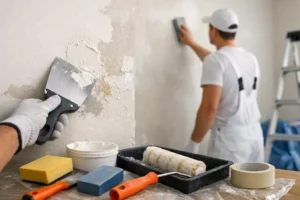
Previous paint condition matters just as much. Loose and peeling paint needs to be removed, edges feathered, and the remaining coating tested for sound adhesion. If an old finish is failing across large areas, applying new paint over it may only reproduce the problem beneath the new color.
Proper Prep Makes Brick Paint Last
Even the best masonry coating will not perform well on a dirty, chalky, damp, or unstable surface. Professional preparation takes time because brick has texture, recessed mortar joints, and many places for dirt and old coating to hide.
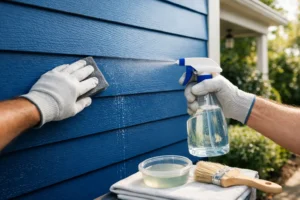
First, the surface should be cleaned carefully to remove dust, mildew, cobwebs, and loose debris. Gentle washing is usually safer than aggressive pressure washing. Excessive pressure can damage mortar joints, force water deep into the wall, and loosen already vulnerable brick faces. Any mildew should be treated with an appropriate cleaner, then thoroughly rinsed.
After cleaning, brick needs adequate dry time. Painting damp masonry can lock in moisture before the coating has a chance to cure. Drying time varies with humidity, shade, rain, wall thickness, and recent weather, so a calendar date alone is not enough to determine readiness.
Next, repair damaged mortar and masonry. Repointing should be completed with a compatible mortar, and repairs need sufficient cure time before painting. Cracks around trim, utility penetrations, and transitions may need flexible exterior sealant, while open mortar joints require a masonry repair rather than caulk.
Finally, use the primer recommended for the paint system. Priming can help even out porosity, improve adhesion, and create a consistent base for the finish coats. The right primer depends on whether the brick is bare, previously painted, stained, chalky, or repaired in sections.
Choose a Finish That Fits Brick
Flat and low-sheen finishes are usually the best visual match for painted brick. They soften the look of textured masonry, reduce glare in direct sunlight, and help the home retain a natural architectural character. A low-luster finish can offer a bit more washability while still avoiding the plastic-like appearance that higher gloss can create.
Satin and glossy finishes are rarely the first choice for broad brick walls. They can emphasize uneven texture, highlight repairs, and make the coating look more like a surface film than part of the masonry. Higher sheens may make sense for metal railings, shutters, trim, or a front door, but brick generally looks best with restraint.
Color deserves practical consideration, too. White and light neutrals can make a home feel fresh and highlight landscaping, but they show dirt more easily near driveways and heavily trafficked entries. Deep charcoal, navy, and black can create dramatic curb appeal, though dark colors absorb more heat and may be less forgiving of dust, fading, and surface variation. A color sample should be tested on multiple sides of the house before making a final decision.
Kansas Weather Raises the Stakes
In Topeka and surrounding areas, exterior brick faces hot summer sun, wind-driven rain, freezing temperatures, and repeated seasonal shifts. Those conditions make surface preparation, moisture management, and adequate cure time especially important.
Painting during a stable weather window gives the coating the best chance to bond and cure correctly. Avoid starting just before heavy rain, during extreme heat, or when overnight temperatures may fall below the manufacturer’s application range. The wall itself can be much hotter than the air temperature when it is in direct sun, which may affect how quickly paint dries and how smoothly it levels out.
For apartment buildings, commercial properties, and occupied homes, planning also matters. A well-organized exterior project protects landscaping and walkways, keeps work areas tidy, and limits disruption while crews address repairs and complete each elevation methodically.
When Painting Brick Is Not the Right Move
Painting is a long-term commitment. Once brick is coated, returning it to its original appearance can be difficult, expensive, and potentially damaging. Homeowners who love the natural variation of brick may be better served by a careful cleaning, mortar repair, or color restoration instead.
It is also wise to pause if the brick is very soft, historically significant, extensively damaged, or showing unresolved moisture issues. Older masonry homes may need a more specialized approach to protect both the appearance and the structure. A careful evaluation is more valuable than rushing into a color change.
A Finish Worth Protecting
The best exterior brick paint is the one that works with the wall, not against it. When the brick is repaired, dry, properly primed, and coated with a compatible breathable system, the finished home gains more than a new color – it gains durable protection and stronger curb appeal.
Royal Painting helps homeowners and property managers make practical exterior painting decisions with clear preparation plans, clean work areas, and finishes built for the conditions their properties face. Before selecting a paint color, start with the condition of the brick. That one step gives every other decision a better chance of lasting.