A painting crew arrives at an occupied unit, furniture is still in place, and a resident needs to know whether they can safely work from home that afternoon. Should tenants vacate during painting? The answer depends on the size of the project, the products being used, ventilation, and the tenant’s health needs. For a small touch-up in a well-ventilated room, leaving may not be necessary. For a full interior repaint, it is often the cleanest, safest, and least stressful option.
For property managers, the goal is not simply to get paint on the walls. It is to protect the property, respect residents’ routines, and complete the work on a dependable schedule. Clear expectations before the crew arrives prevent most avoidable complaints.
When Should Tenants Vacate During Painting?
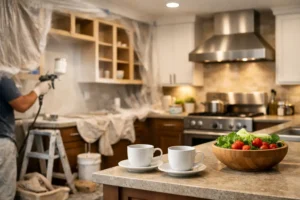
Tenants should generally plan to be out of the unit during active painting when work covers several rooms, includes ceilings or trim, requires strong primers, or makes it difficult to access key areas such as kitchens, bathrooms, or bedrooms. Even low-odor products create activity that can disrupt normal use of a home: ladders, drop cloths, open windows, equipment, and painters moving between rooms.
Vacating is especially sensible when a resident has asthma, chemical sensitivities, migraines, allergies, respiratory conditions, or young children and pets in the home. Low-VOC and zero-VOC paints can reduce odor and airborne compounds, but they do not make a work area completely disruption-free. Primers, caulk, patching materials, cleaners, and freshly painted surfaces may still have odors or require time to dry and cure.
A tenant may be able to remain in the unit for a brief, contained job, such as repairing and repainting one wall in an unoccupied room. That decision should be based on the actual scope, not a general assumption that all painting is either harmless or unlivable.
The Project Scope Makes the Difference
A professional crew can often phase work to reduce inconvenience. If one bedroom is being painted, the tenant may be able to use other parts of the unit once pathways are protected and the work area is kept separate. That approach becomes harder when the project involves a whole apartment, multiple occupied units, hallways, stairwells, or common areas.
Interior repaints also require more than brush and roller time. Walls may need patching, sanding, spot priming, and caulking before final coats are applied. Furniture may need to be moved away from walls, window coverings protected, and closets or cabinets kept accessible. A resident staying in the unit can slow the process if the crew must repeatedly stop, relocate materials, or wait for rooms to be cleared.
For an apartment turnover, vacancy is usually the best time to paint. It gives the crew full access, allows repairs to be completed properly, and helps ensure the unit is dry, clean, and ready before the next resident moves in. For occupied apartments, thoughtful scheduling matters more than speed alone.
Health, Ventilation, and Drying Time
Fresh paint odor is one reason tenants choose to leave, but it is not the only one. Good ventilation helps reduce odors and supports drying, especially when weather allows windows to be opened. Fans and ventilation systems may also help, provided they do not blow dust onto wet paint or create unsafe conditions around the work area.
Property managers should avoid promising an exact odor-free timeline. Dry-to-touch paint may be ready within hours, while full curing takes longer. Humidity, temperature, wall condition, product selection, and airflow all affect the schedule. Kansas weather can change quickly, so a plan that relies on open windows should include practical alternatives when heat, cold, rain, or high humidity gets in the way.
If a tenant has a documented medical concern, take it seriously and discuss reasonable scheduling options early. That may mean arranging work while the resident is away, completing one area at a time, or allowing extra time before the tenant returns. Specific accommodation requirements can depend on the lease, local rules, and the circumstances, so property managers should follow their established policies and seek appropriate guidance when needed.
Notice and Communication Matter as Much as Paint Selection
A well-run occupied painting project starts before the painters arrive. Residents need clear written notice that explains the date, expected work hours, rooms or surfaces involved, access needs, and whether they should remove belongings from walls or move small items away from work areas. They should also know who to contact with questions.
Avoid vague notices that say painters will be on-site soon. A tenant who receives a specific window can arrange childcare, work remotely from another location, secure pets, and prepare the space. It also gives the manager time to identify concerns such as medical issues, mobility limitations, or a resident who cannot be present during the proposed entry time.
The notice should set realistic expectations about furniture. Tenants may be asked to remove fragile items, electronics, wall décor, and valuables from the area. A professional painting crew can protect floors and cover larger furniture when agreed upon, but clear access is still necessary for precise cut lines and durable coverage. Painting around clutter can compromise both efficiency and finish quality.
Keeping Occupied Work Clean and Controlled
Residents are more likely to cooperate when they see that the crew respects their home. Daily cleanliness is not a cosmetic extra. It protects belongings, keeps walkways usable, and builds confidence that the project is being managed responsibly.
For occupied units, the crew should contain the work area as much as practical, protect floors and nearby surfaces, keep tools organized, and remove debris at the end of each day. The project manager should also communicate promptly if repairs reveal an issue that changes the scope or timing. A surprise delay is frustrating; a timely explanation and updated plan are manageable.
Pets deserve special attention. Paint supplies, open doors, unfamiliar workers, and noise can create risks for animals. Tenants should be asked to secure pets away from the work area or arrange for them to be elsewhere during active painting. This protects the pet, the crew, and the quality of the finished work.
Special Circumstances That Require Extra Care
Older properties may need additional review before prep work begins. Sanding, scraping, or disturbing older painted surfaces can create concerns that do not apply to a standard repaint. Property owners should follow applicable requirements for the building’s age and condition, particularly before work that disturbs existing coatings.
Common-area painting has its own challenges. Residents may not need to leave their apartments, but they do need safe access through hallways, stairwells, entryways, and parking areas. Phasing work, posting clear directional signage, and keeping exits accessible can minimize disruption while maintaining a professional appearance.
Commercial or mixed-use properties face a similar issue. The best schedule may be after business hours, over a weekend, or in sections that keep customer-facing areas open. The right approach is the one that protects safety and quality without creating unnecessary downtime.
A Practical Plan for Property Managers
Before scheduling an occupied painting project, confirm the scope with the contractor and decide whether the work can be completed room by room or should be handled while the unit is vacant. Then provide residents with enough notice, explain preparation responsibilities, and give them a direct point of contact. Finally, build in realistic time for surface preparation, drying, cleanup, and any needed touch-ups.
A reliable contractor should help make these decisions easier by providing a clear estimate, a realistic schedule, and a plan for protecting the space. Royal Painting approaches occupied projects with careful preparation, clean daily work areas, and communication designed to keep residents and property teams informed from start to finish.
The best outcome is not simply a freshly painted unit. It is a polished, durable finish completed with as little disruption as the project allows, so tenants can return to a space that feels cared for and ready to use.