A vacant apartment can look ready at first glance, then reveal scuffed walls, nail holes, stained trim, and mismatched touch-ups once the light changes. This tenant turnover painting example shows how a well-planned repaint can turn a recently vacated two-bedroom unit into a clean, market-ready space without creating unnecessary downtime between residents.
For property managers, the goal is not simply to put fresh paint on every surface. The goal is to make practical decisions that protect the property, present the unit well, control costs, and keep the turn schedule moving. The right scope depends on the unit’s condition, the length of the prior tenancy, and the standard expected across the property.
Tenant Turnover Painting Example: A Two-Bedroom Unit
Consider a two-bedroom, one-bath apartment that has been occupied for three years. The previous tenant kept the unit reasonably clean, but the walls show normal wear: furniture rubs in the living room, dark marks along the hallway, picture-hanging holes in both bedrooms, and chipped paint around several door frames. The kitchen has grease residue near the range, while the bathroom ceiling has light staining from humidity.
The property manager needs the apartment ready for photography and showings within five business days. A full repaint of every surface would deliver a uniform finish, but it may not be necessary if ceilings and some walls remain in good condition. A professional inspection creates a clear plan before work begins.
In this example, the crew finds that the living room, hallway, kitchen, bathroom, and primary bedroom need repainting. The second bedroom has only a few minor wall marks and can be repaired and blended successfully. Ceilings are sound except in the bathroom, where stain-blocking primer and a fresh ceiling coat are recommended. Baseboards and door trim need cleaning and targeted touch-ups rather than full repainting.
That approach gives the manager a polished result while avoiding charges for work the unit does not need.
Day One: Inspect, Protect, and Repair
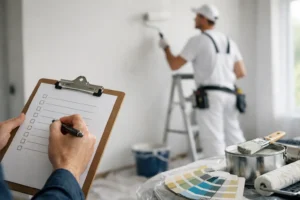
A quality turnover starts with surface preparation. Before paint is opened, the crew walks the unit with the property manager or maintenance contact to confirm the scope, note pre-existing damage, and identify any areas needing repair beyond painting.
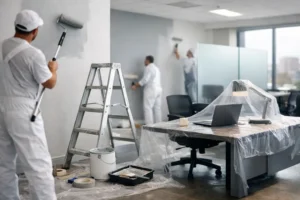
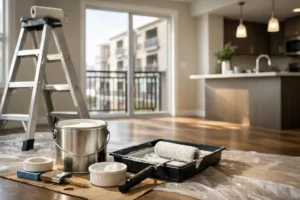
Furniture is no longer in the unit, but floors, countertops, appliances, cabinets, fixtures, and windows still need protection. Clean work areas matter in an occupied property and in a vacant one. A tidy crew reduces cleanup time for maintenance, avoids damage claims, and helps the next trade get to work without delay.
The walls are cleaned where needed to remove dust, fingerprints, and kitchen residue. Grease and residue can prevent paint from bonding correctly, so skipping this step often leads to visible problems later. Nail holes and small dents are filled, larger drywall damage is patched, and rough repairs are sanded smooth. Loose caulk around trim is removed and replaced where appropriate.
The bathroom ceiling stain receives a stain-blocking primer. This is a small detail with a large effect. Applying standard ceiling paint directly over a water or humidity stain can allow the discoloration to reappear after the unit is listed.
Day Two: Prime Repairs and Apply the First Coat
Once repairs are dry and smooth, patched areas are spot-primed. Primer helps repaired drywall absorb paint evenly, preventing the dull, flashing appearance that makes touch-ups stand out under natural light.
For this unit, the selected wall color is a durable warm neutral already used throughout the property. Keeping a consistent approved color simplifies future maintenance, supports a cohesive look from unit to unit, and makes it easier to maintain a supply of matching paint. A neutral color also gives prospective renters a clean backdrop for their own furniture and decor.
The crew cuts in along ceilings, trim, doors, and corners, then rolls the first coat across the designated rooms. Proper application is especially important in hallways and living rooms, where light from windows can expose lap marks or uneven coverage. The objective is a consistent sheen and solid color, not a quick coat that looks acceptable only from across the room.
At the end of the day, the work area is organized, tools are removed or stored safely, and the manager receives a progress update. Clear communication helps the leasing and maintenance teams plan around the painting schedule.
Day Three: Finish Coats and Detail Work
After the first coat has dried, the crew checks coverage in daylight and under interior lighting. Some walls, particularly those with prior dark scuffs or heavy repairs, need a second coat for a uniform finish. In this tenant turnover painting example, all newly painted walls receive a second coat because the manager wants a consistent standard for marketing the apartment.
The trim receives careful touch-ups where paint is chipped or scuffed. Door frames around bedrooms and the bathroom often show the most wear from moving furniture, vacuuming, and everyday traffic. Rather than coating trim that is otherwise sound, focused touch-ups restore a maintained appearance and keep the project efficient.
The second bedroom gets a different treatment. After hole repair, priming, and color-matched blending, the walls look clean and even. This is where professional judgment matters. A full-room repaint is the better choice when paint has faded substantially, wall color is unknown, the finish cannot be blended, or several repairs are spread throughout the space. When the existing paint is in good condition and the match is accurate, targeted work can be a responsible cost-saving choice.
What This Turnover Scope Includes
The completed scope in this example includes wall repair, surface cleaning, spot priming, repainting of five primary areas, bathroom ceiling treatment, and trim touch-ups. It does not include cabinet painting, full ceiling repainting, drywall replacement, mold remediation, or major carpentry repairs.
Defining those boundaries matters. Painting contractors can often identify related issues, but a clear estimate separates standard turnover painting from repairs that require additional approval. Property managers get predictable pricing, while crews can stay focused on completing approved work on schedule.
Material selection also affects the result. High-traffic apartment walls benefit from a durable, washable interior finish that can handle routine cleaning. Bathrooms need products suited to moisture-prone spaces. Lower-quality paint may reduce the initial invoice, but poor hide, reduced durability, and frequent touch-up needs can raise turnover costs over time.
The Final Walk-Through Before Leasing
Before the unit is released for cleaning, maintenance completion, or photography, a final walk-through checks the details that renters notice. Walls should have even coverage and clean cut lines. Repaired areas should not show through the finish. Trim touch-ups should blend without paint on floors, hardware, outlets, or adjacent surfaces.
This is also the time to verify that the unit has been left clean. Protective materials are removed, debris is collected, and the space is ready for the next step in the turnover process. Professional painting should reduce the manager’s workload, not leave an extra cleanup task for the maintenance team.
For a unit like this, a three-day painting schedule can be realistic when access is available, repairs are minor, and other trades are coordinated. The schedule may need to expand if there is extensive drywall damage, nicotine staining, water damage, strong odors, multiple color changes, or work required in occupied neighboring areas. A dependable estimate should account for those conditions upfront rather than promising a timeline that cannot be met.
When Full Repainting Is Worth It
Targeted painting works well for normal wear in a unit with a consistent, well-maintained color scheme. Full repainting is usually the better investment after a long tenancy, when tenants used non-approved colors, when odor or smoke treatment is needed, or when repairs appear across most walls.
It can also be the right choice when a property is updating its look. A uniform neutral palette improves consistency across available units and can make maintenance easier over the long term. For a premium unit or a unit photographed frequently for leasing, the visual benefit of complete wall repainting may outweigh the added cost.
Royal Painting helps apartment property managers in Topeka and surrounding areas assess each vacant unit, build a clear scope, and complete painting with careful preparation, clean daily work practices, and reliable scheduling. The best turnover plan is the one that gives your next resident a fresh first impression while keeping your property ready to lease.