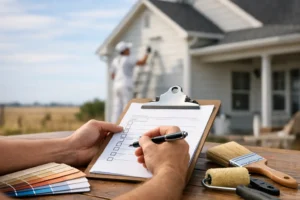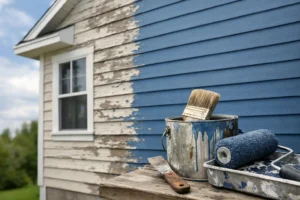
A fresh coat of paint should improve your property, not create a difficult insurance claim. This contractor insurance review guide helps homeowners, business owners, and property managers look beyond a reassuring phrase like “licensed and insured” and confirm what protection is actually in place before a crew begins work.
For a small interior project, insurance may feel like a detail. For exterior painting, occupied apartment turns, commercial spaces, ladders, lifts, and surface preparation, it becomes a practical part of choosing the right contractor. The goal is not to make the hiring process complicated. It is to ask clear questions early, review the right documents, and select a painting company that takes responsibility for its work.
Why insurance belongs in every painting estimate review
Painting can involve more risk than people expect. A ladder can damage siding or landscaping. Overspray can reach a vehicle, window, or neighboring property. A worker can be injured while preparing a ceiling, working on a roofline, or moving equipment through a busy commercial area. Even careful crews need proper coverage behind their safety practices.
Insurance also signals how a contractor runs the business. A professional company plans for the unexpected, uses documented processes, and does not expect the client to absorb avoidable risk. Price still matters, but the lowest bid can become expensive if it comes with unclear coverage, uninsured labor, or no reliable path to resolving damage.
For property managers, insurance review is especially valuable. Work may take place around tenants, visitors, maintenance staff, and common areas. A certificate of insurance helps support vendor approval requirements and gives owners a clearer record of who is responsible for the project.
The coverage to ask a painting contractor about
You do not need to become an insurance expert. You do need to understand the basic coverage types that protect a project. Ask the contractor to explain what policies they carry and provide current proof when appropriate.
General liability insurance
General liability coverage is the first item most property owners should verify. It may help address third-party property damage or bodily injury related to the contractor’s operations. For example, it could apply if paint is spilled on a finished floor, a ladder damages a gutter, or a visitor is hurt because of a work-related hazard.
Ask for the policy limits, not just confirmation that a policy exists. The appropriate limit depends on the job. A homeowner repainting two bedrooms has different exposure than an apartment complex repaint, a medical office, or a large commercial exterior. A contractor should be able to discuss coverage directly and provide documentation without hesitation.
General liability is not a promise that every issue will be covered automatically. Policy terms, exclusions, and the facts of an incident matter. That is why good contractors also prevent problems through careful preparation, protected work areas, daily cleanup, and experienced crews.
Workers’ compensation coverage
Workers’ compensation coverage is designed for employee injuries that occur on the job. This is a crucial question for any project involving ladders, scaffolding, elevated work, or extensive surface preparation.
Do not assume that a contractor’s general liability policy covers a worker injury. It generally serves a different purpose. If a contractor uses employees, ask whether workers’ compensation is in place. If the business relies on subcontractors, ask how those crews are insured and supervised.
Kansas requirements and business structures can vary, so the right question is straightforward: “Who will be on my property, and what coverage protects them if they are injured?” A reputable contractor should give you a clear answer.
Commercial auto and equipment coverage
Commercial auto insurance matters when contractor vehicles are actively used for the project, especially at commercial properties, multifamily communities, or tight residential streets. It can be relevant when vehicles, trailers, lifts, or delivery activity create additional traffic around your property.
Equipment coverage is usually the contractor’s responsibility, but it is still worth discussing for larger jobs. You should not be expected to store tools, provide access outside agreed hours, or accept responsibility for contractor-owned equipment without a clear agreement.
Umbrella coverage and project-specific requirements
Some commercial owners, associations, and property management companies require higher liability limits or umbrella coverage. Others ask to be named as an additional insured for the duration of the work. These are common risk-management requests for larger projects, but they should be addressed before the contract is signed, not when the crew arrives.
Share your insurance requirements with bidders at the estimate stage. This gives each contractor a fair chance to confirm compliance and price the project accurately. It also prevents delays when a maintenance team or vendor portal needs documents before work can be scheduled.
How to review a certificate of insurance
A certificate of insurance, often called a COI, is a snapshot showing that certain policies were active when the certificate was issued. It is useful, but it is not the entire policy and does not replace a written contract.
When reviewing a certificate, make sure the contractor’s business name matches the name on the estimate and contract. Check that the policy dates cover your project schedule, especially if exterior painting could be delayed by weather. Review the listed coverage types and limits, then confirm that the insurance agency information is present and appears legitimate.
For a larger commercial or multifamily project, request that the certificate be sent directly from the insurance agent or agency. This simple step helps reduce the risk of relying on outdated or altered paperwork. If your property requires additional insured status, verify that the certificate and any required endorsement reflect the correct legal owner or management entity.
Be cautious if a contractor says documents will come later, provides a certificate that has expired, or cannot explain the information on it. Those are not details to overlook because a crew is available next week or the quote is attractive.
Match the insurance review to the scope of work
The right level of review depends on the property and project. A homeowner hiring a painter for cabinets or an interior refresh may focus on current general liability coverage, workers’ compensation, and a clear plan for protecting floors, furniture, and fixtures. The contractor should also explain who will move items, what preparation is included, and how touch-ups will be handled.
An exterior project deserves additional attention. Ask how the crew protects landscaping, windows, roofs, driveways, and neighboring properties. If the work involves tall elevations, confirm how access equipment will be used and where it will be placed. Insurance supports the work, but careful planning is what prevents most damage in the first place.
For businesses and apartment communities, review coverage alongside operational planning. Discuss tenant notices, daily cleanup, parking access, work hours, restricted areas, and the sequence of buildings or units. A reliable painting contractor understands that minimizing disruption is part of protecting the property and its reputation.
Compare more than the insurance certificate
Two contractors may both show proof of insurance and still deliver very different project experiences. Review each estimate for preparation work, materials, surface repairs, number of coats, cleanup, timeline, and warranty or satisfaction commitments. Vague scopes make it harder to compare bids and harder to resolve disagreements later.
Look for a contractor who is specific about the finish you can expect. On interior work, that may mean clean cut lines, protected furnishings, and a room left ready to use. On exterior work, it means proper cleaning, scraping, priming where needed, and coatings selected for the surface and Kansas weather conditions.
Communication matters here. The contractor should identify a point of contact, explain how change requests are handled, and provide a realistic schedule. A polished result depends on more than the final color. It depends on preparation, dependable crews, and a company that respects your property from the first estimate through final walkthrough.
Questions worth asking before you sign
Ask who will perform the work, whether employees or subcontractors will be involved, and what insurance applies to each crew. Ask for current proof of coverage and whether your project has any special requirements. Then ask what happens if paint reaches an unintended surface, a fixture is damaged, or weather interrupts an exterior job.
The answers should be direct and consistent with the written estimate. A professional contractor will not treat these questions as distrust. They are part of responsible project planning, particularly when you are protecting a home, occupied building, or income-producing property.
Royal Painting approaches every project with the same expectation: clear estimates, careful preparation, clean work areas, and accountability for the finished result. Whether you are refreshing a home in Topeka or planning a larger property update, choose a contractor who can show their coverage, explain their process, and give you confidence before the first drop cloth goes down.
A few extra minutes spent reviewing insurance can make the entire project feel easier. Once the details are clear, you can focus on the result that matters most: a clean, durable finish that makes your property look well cared for.